




12 ISA detainees released ahead of Raya celebration
Twelve Internal Security Act (ISA) detainees have been released from the Kamunting detention camp today.
Twelve Internal Security Act (ISA) detainees have been released from the Kamunting detention camp today.
This was announced by Home Minister Hishammuddin Hussein during a visit to the Sungai Buloh Prison.
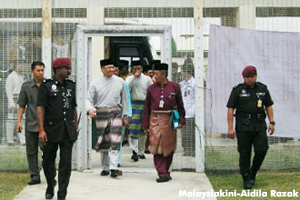 This is the second batch of detainees released this month. The first batch was released on Aug 3, involving three detainees.
Currently, there are 30 detainees still being held in the camp.
Among those who have been released today is Fadzullah Abdul Razak, who was one of the ISA detainees who took part in a hunger strike to protest against their incarceration without trial.
His mother, Hadijah CP Veeravu, told Malaysiakini that prison authorities had informed that her son should be back home in Sungai Buloh in time for the breaking of fast.
“We were told he would be home by 6pm, if all goes well,” she said.
In an immediate reaction, Human Rights Commission (Suhakam) member James Nayagam said all detainees should have been released upon the ISA being repealed .
"All should have been released today. Upon the ISA being repealed, we thought everyone would have been released immediately," Nayagam said.
More to be released
Speaking to reporters after his visit to the prison, Hishammuddin said the 12 released today had been detained for human trafficking and terrorism.
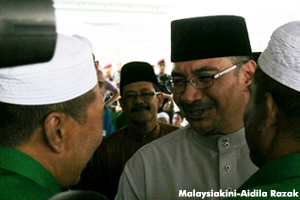 "Those arrested for human trafficking had been involved in producing fake immigration stamps and travel documents for Malaysia and other countries, as well as colluding to turn Malaysia into a human trafficking hub," he said.
The others were allegedly involved in militant groups Darul Islam and Jemaah Islamiah.
All 12 are released earlier than what is stipulated in their detention orders as they have been rehabilitated, he said.
Seven of them are Malaysian, three Indonesian and two Pakistani.
"They will not be charged as they have shown repentance for their deeds and are no longer a threat to the country," Hishammuddin said.
He added that the remaining 10 Malaysians still being held in Kamunting would be "released in stages".
The foreigners are likely to be repatriated pending confidential discussions with their respective governments, based on previously signed memoranda of understanding.
"Their release is not due to pressure from any party, political or otherwise," Hishammuddin said, including the hunger strike previously mounted by a group of detainees.
"I am relieved that this has finally come about."
The Internal Security Act has been replaced by the Security Offences (Special Measures) Act 2012, which came into force on July 31, 2012.


Are you sure you want to delete this comment?
This action cannot be undone.